Computing
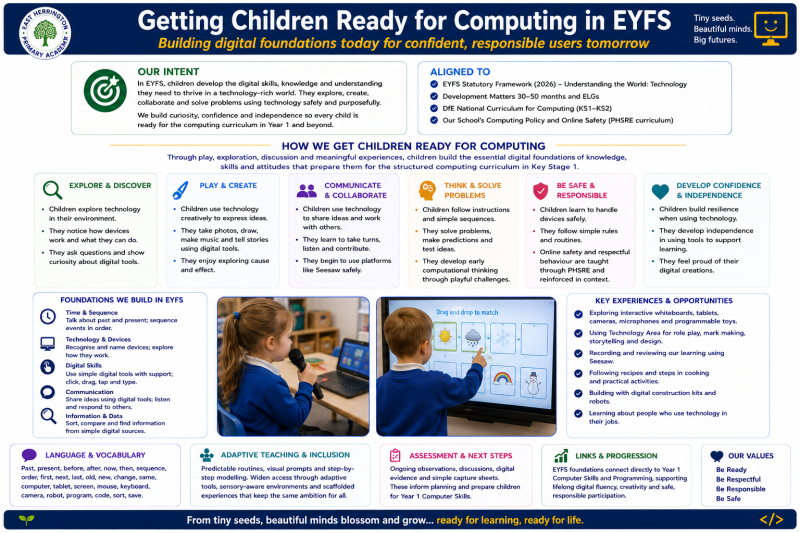
Our Intent
Computing equips pupils to understand and change the digital world through computational thinking, creativity and responsible use of technology. Pupils learn how digital systems work, how to create and debug programs, how to manage data and how to create purposeful digital media. The curriculum builds confidence and independence so all pupils can access digital learning platforms, including Seesaw, and use technology to communicate learning. Computing contributes to SMSC through collaboration, ethical and responsible technology use, creativity, reflection, respectful communication and consideration of technology’s impact on people and society. Careers and sustainability links show pupils how computing supports future jobs, green technology, accessibility, communication and global problem-solving.
Our Implementation
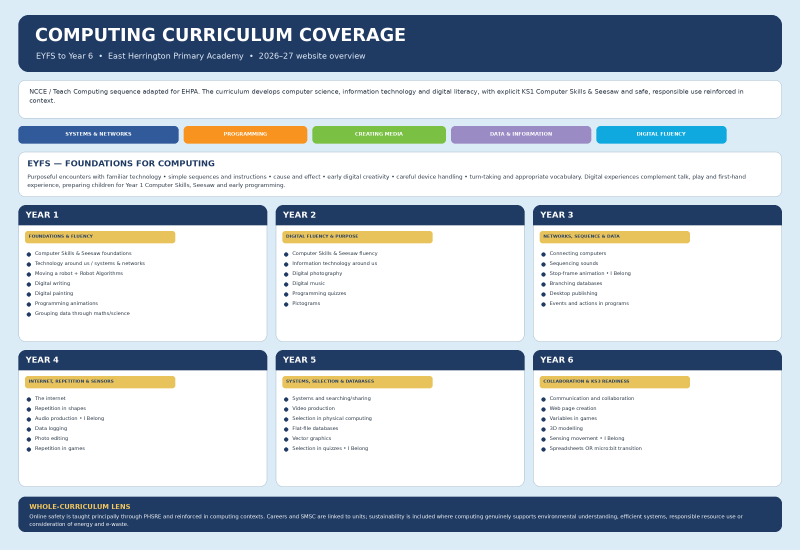
The school follows NCCE/Teach Computing units, adapted to our context and timetable while retaining conceptual progression.
- In KS1, Computer Skills and Seesaw are explicitly taught so technology supports wider learning rather than becoming a barrier.
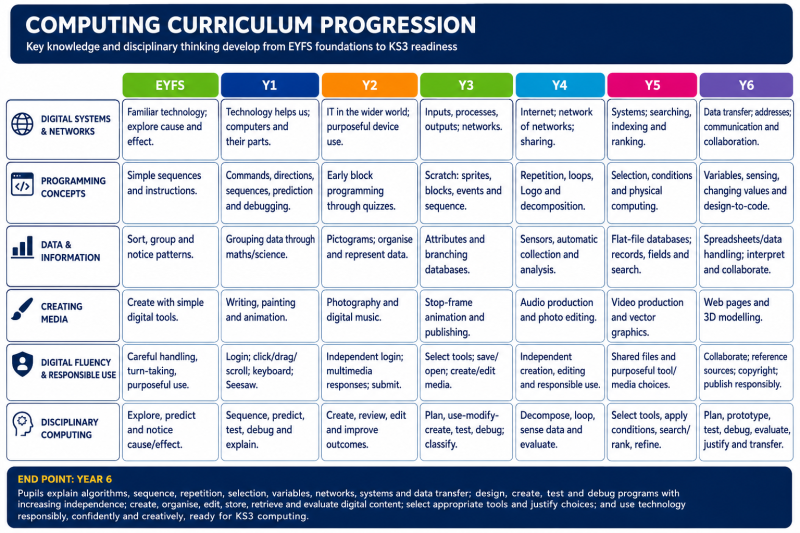
- The Year 1 programming unit combines Moving a Robot and Robot Algorithms, securing early algorithmic thinking while allowing Year 2 to build digital fluency.
- Online safety is taught mainly through PHSRE; computing lessons reinforce safe, responsible and respectful behaviour whenever platforms, search, media or sharing are used.
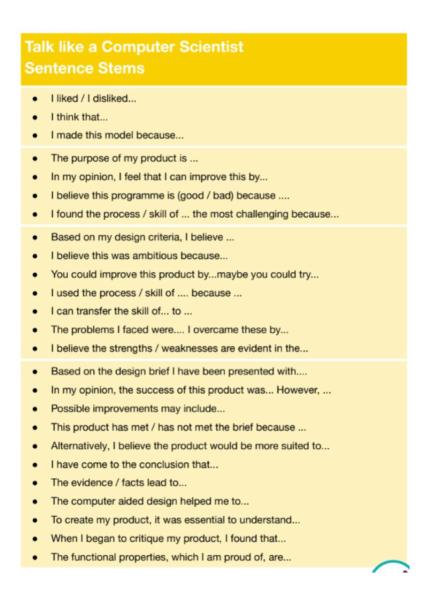
- Lessons include explicit vocabulary, modelling, guided practice, independent creation, debugging, review and opportunities to evaluate outcomes.
The Impact
By Year 6, pupils understand key computer science concepts including algorithms, sequence, repetition, selection, variables, networks, systems and data transfer.
- They use information technology purposefully to create, organise, edit, store, retrieve and evaluate digital content across media types.
- They are digitally literate: responsible, competent, confident and creative users of technology, ready for KS3 computing and future workplaces.
- Pupils can explain how computing connects to the wider world, including communication, creative industries, engineering, research, environmental monitoring and sustainable design.
- Subject leaders monitor impact through pupil voice, saved work, Seesaw evidence, practical outcomes, assessment endpoints and teacher judgement
Files to Download