Art
Our Intent
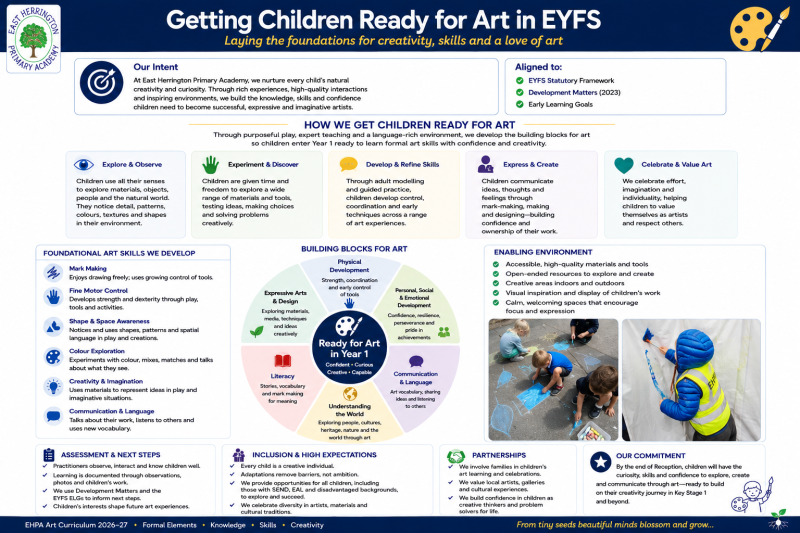
- At East Herrington Primary Academy, Art and Design enables every pupil to observe closely, think creatively, develop technical control and communicate ideas visually.
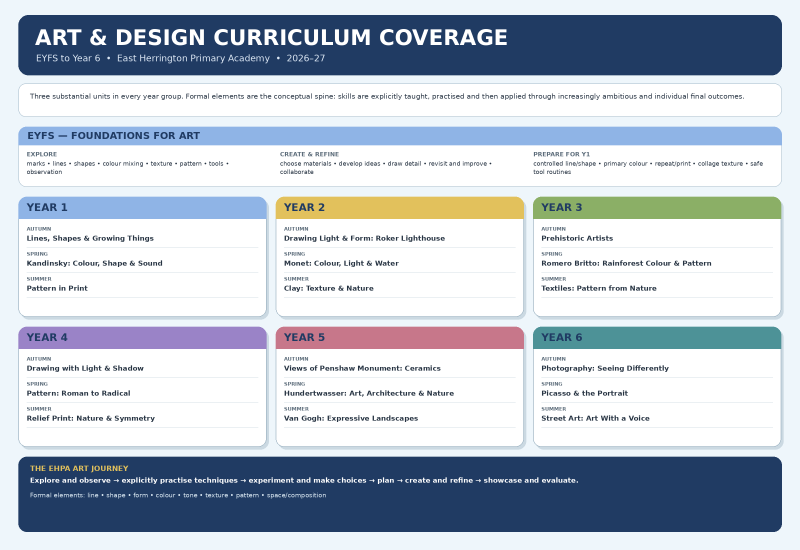
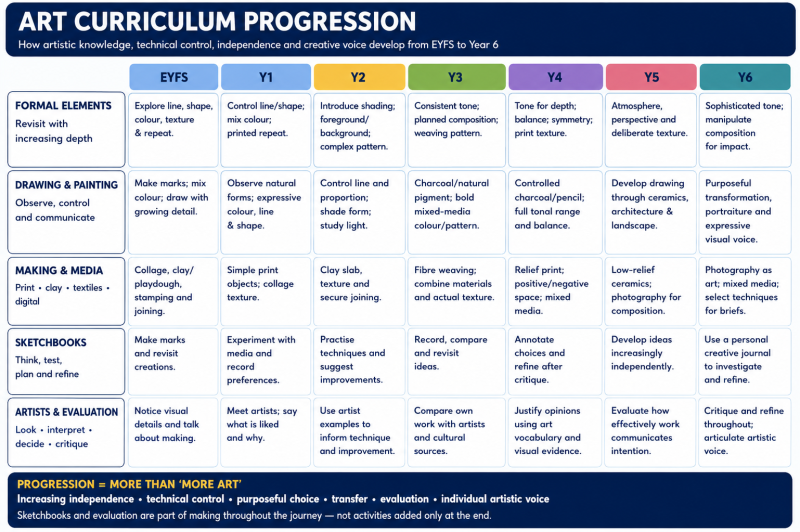
- Our curriculum is built around the formal elements of art. Pupils revisit line, shape, form, colour, tone, texture, pattern and space/composition with increasing sophistication, learning how artists manipulate these elements to create meaning and impact.
- Pupils develop secure practical knowledge in drawing, painting, printmaking, sculpture/ceramics, textiles and digital/photographic media. Skills are explicitly taught and practised before pupils make increasingly independent choices in ambitious final outcomes.
- Children encounter significant artists, craft makers, designers, photographers and architects from different periods, cultures and backgrounds. They learn that art reflects and shapes culture and that artistic skill connects to a wide range of careers.
- Art contributes meaningfully to SMSC, local identity and climate/sustainability education where these links arise naturally from the artwork, materials or design problem being studied.
Our Implementation
Core Sequence
- Retrieve prior formal-element and technique knowledge.
- Encounter/interpret artists, artworks or visual sources.
- Explicitly model a new technique or artistic process.
- Practise in sketchbooks through short focused studies.
- Plan and select ideas/materials for an individual response.
- Create, refine, evaluate and present a final piece.
What Pupils Experience
- Drawing in every year.
- Painting in every phase.
- Printmaking from simple stamps to relief/stencil.
- Ceramics/sculpture from clay texture to low relief and expressive form.
- Textiles through weaving/fibre art.
- Photography/digital art as an artistic discipline in Year 6.
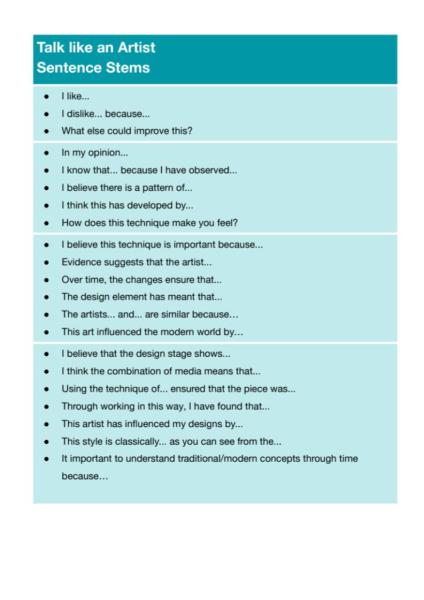
- Regular discussion, comparison and evaluation using subject vocabulary.
Teaching Principles
- High expectations for all, with access adapted rather than ambition reduced.
- Teacher modelling makes invisible artistic decisions visible.
- Pupils learn that experimentation, revision and “mistakes” are part of creative practice.
- Final outcomes are not identical copies: artist study informs, rather than dictates, pupils’ work.
- Cross-curricular links are used when they deepen Art, not when Art becomes illustration for another subject.
Our Impact
By the end of Year 6 Pupils can:
- manipulate formal elements deliberately to communicate ideas and create visual impact;
- draw, paint, print, sculpt/model, work with textiles and use photography/digital media with increasing technical confidence;
- use sketchbooks as personal working journals to investigate, record, develop, revisit and refine ideas;
- discuss artists and artworks using accurate vocabulary, recognising historical/cultural context and diverse perspectives;
- select materials and techniques for purpose rather than simply follow a recipe;
- evaluate throughout the creative process and make purposeful improvements;
- present work confidently and recognise artistic/creative careers as genuine future pathways.
Files to Download