Science
Our Intent
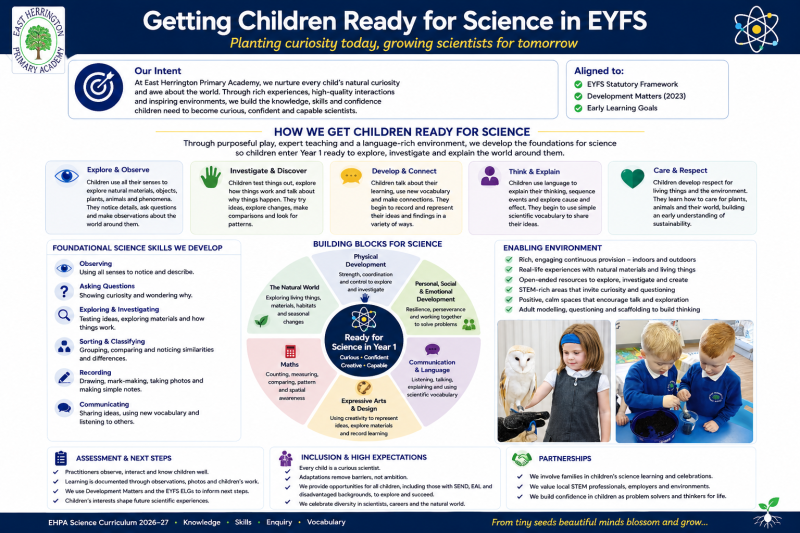
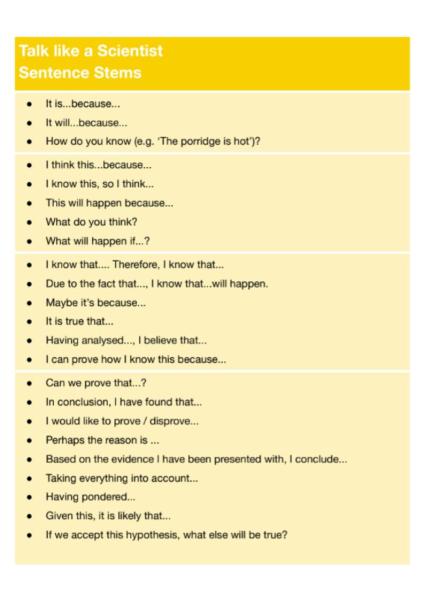
At East Herrington Primary Academy, we aim to develop curious, knowledgeable and confident young scientists who understand the world around them and recognise the relevance of science to their lives and futures. Our curriculum is carefully sequenced from EYFS to Year 6 so that pupils build, retrieve and apply substantive and disciplinary knowledge. Through practical enquiry, scientific vocabulary, models and evidence, pupils learn not only scientific facts, but how to think, question and work scientifically. Science contributes to pupils’ SMSC and personal development by encouraging curiosity, respect for evidence, collaboration and appreciation of the diversity and wonder of the natural world. Climate and sustainability education develops pupils’ understanding of their relationship with the environment and their responsibility to protect living things and our planet. We broaden aspirations by making careers explicit within the curriculum, introducing diverse scientists and connecting learning to STEM careers, employers and workplaces, enabling every child to see that science could be part of their future.
Our Implementation
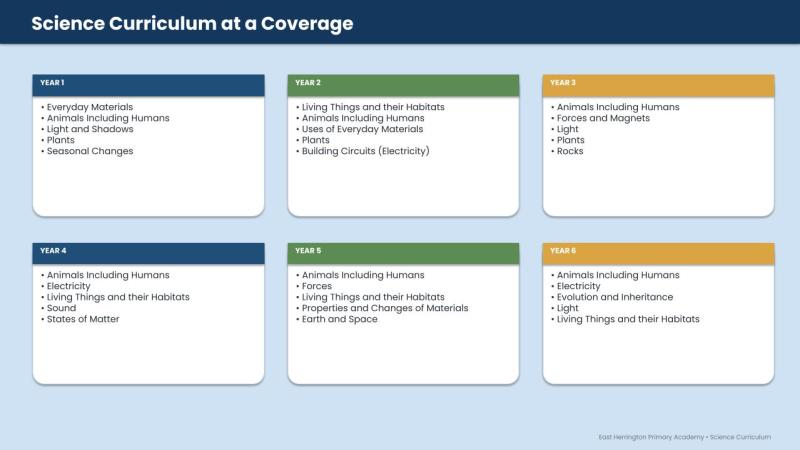
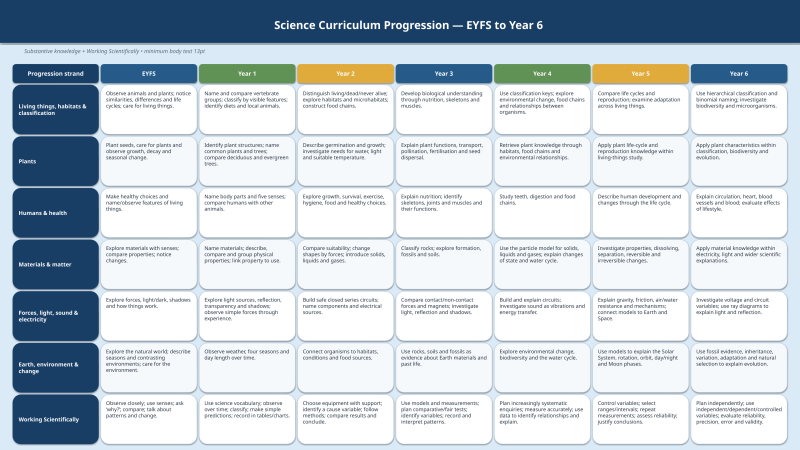
Science is taught through a coherent, progressive curriculum from EYFS to Year 6, with each unit deliberately building upon identified prior learning. Teachers use Why This? Why Now? links to make progression explicit and connect new learning to what pupils already know. The curriculum itself identifies prior learning alongside substantive knowledge, disciplinary knowledge and enquiry types. Lessons develop substantive and disciplinary knowledge together through explicit teaching, scientific vocabulary, practical investigation, observation, classification, pattern seeking, research and comparative/fair testing. Scientific models and increasingly independent enquiry enable pupils to explain phenomena using evidence. Learning is enriched through the local environment, Science Week, STEM and Eco activities. Relevant units provide meaningful opportunities to explore climate, biodiversity, sustainability and responsible environmental choices, building from care for the natural world in EYFS. Careers are woven through units and linked to Gatsby Benchmarks 4, 5 and 6, connecting curriculum learning with careers, encounters with employers and experiences of workplaces. End-of-unit assessment endpoints identify working towards, expected and greater-depth achievement and inform future teaching.
The Impact
By the end of Year 6, pupils will have developed a secure and connected body of scientific knowledge and the disciplinary skills needed to investigate questions, evaluate evidence, identify patterns and explain scientific phenomena with increasing independence. Pupils will remember more, make connections and apply previous learning to new contexts, using increasingly precise scientific vocabulary, models and evidence. Assessment demonstrates progression from supported understanding towards independent application and deeper scientific reasoning. The curriculum’s assessment model explicitly judges what pupils know, remember and can apply through scientific explanation, enquiry and evidence. Pupils will be curious, confident and enthusiastic about science and understand its importance beyond the classroom. They will recognise how scientific understanding informs healthy choices, environmental responsibility, climate and sustainability, contributing positively to their SMSC and personal development. Through encounters with diverse scientists, STEM careers, employers and workplaces, pupils will understand the breadth of opportunities science provides and recognise that these pathways are open to them. This builds aspiration and prepares pupils effectively for KS3 science and their future lives.
Our Implementation
Files to Download